Stamped or standard
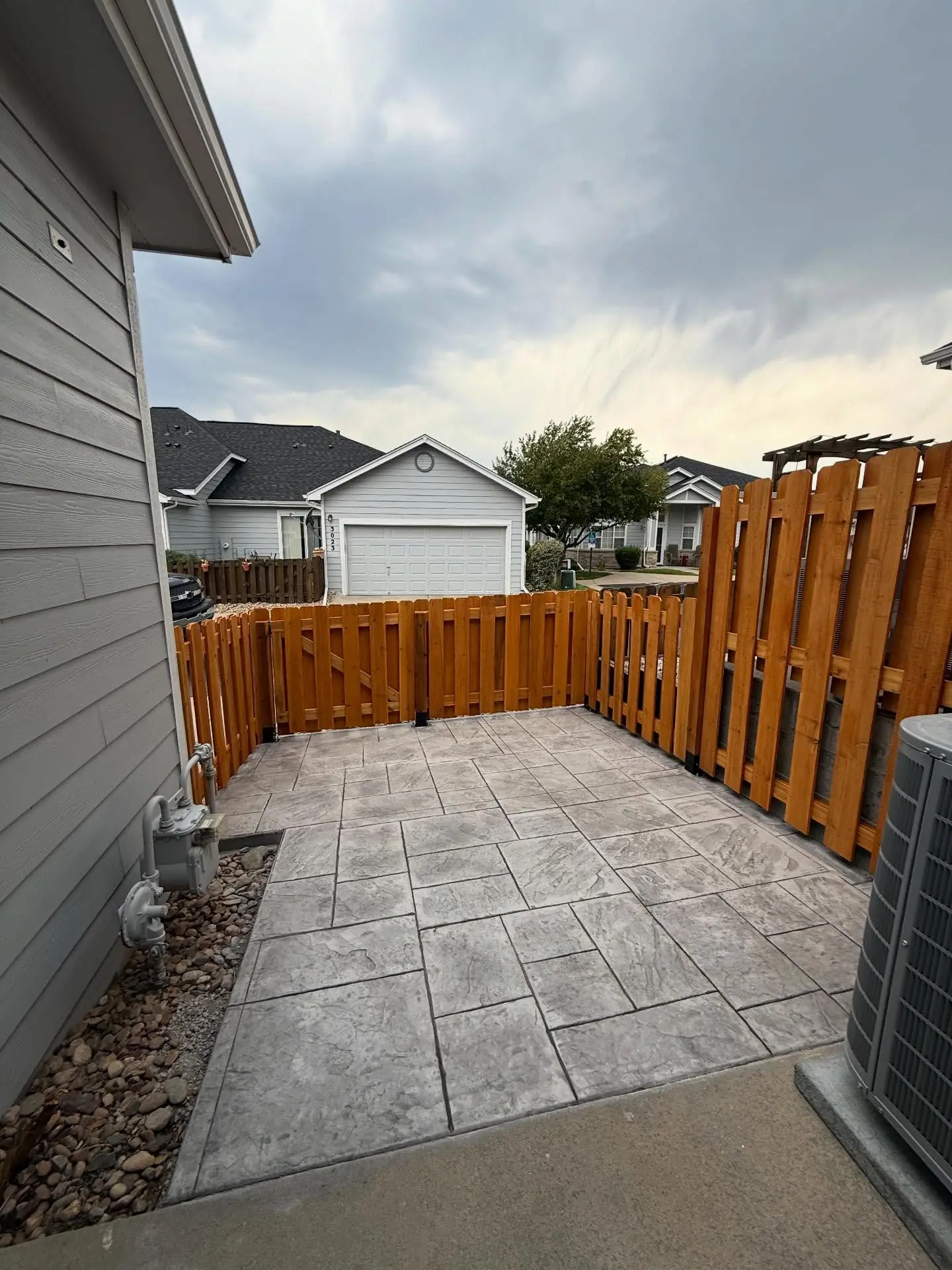
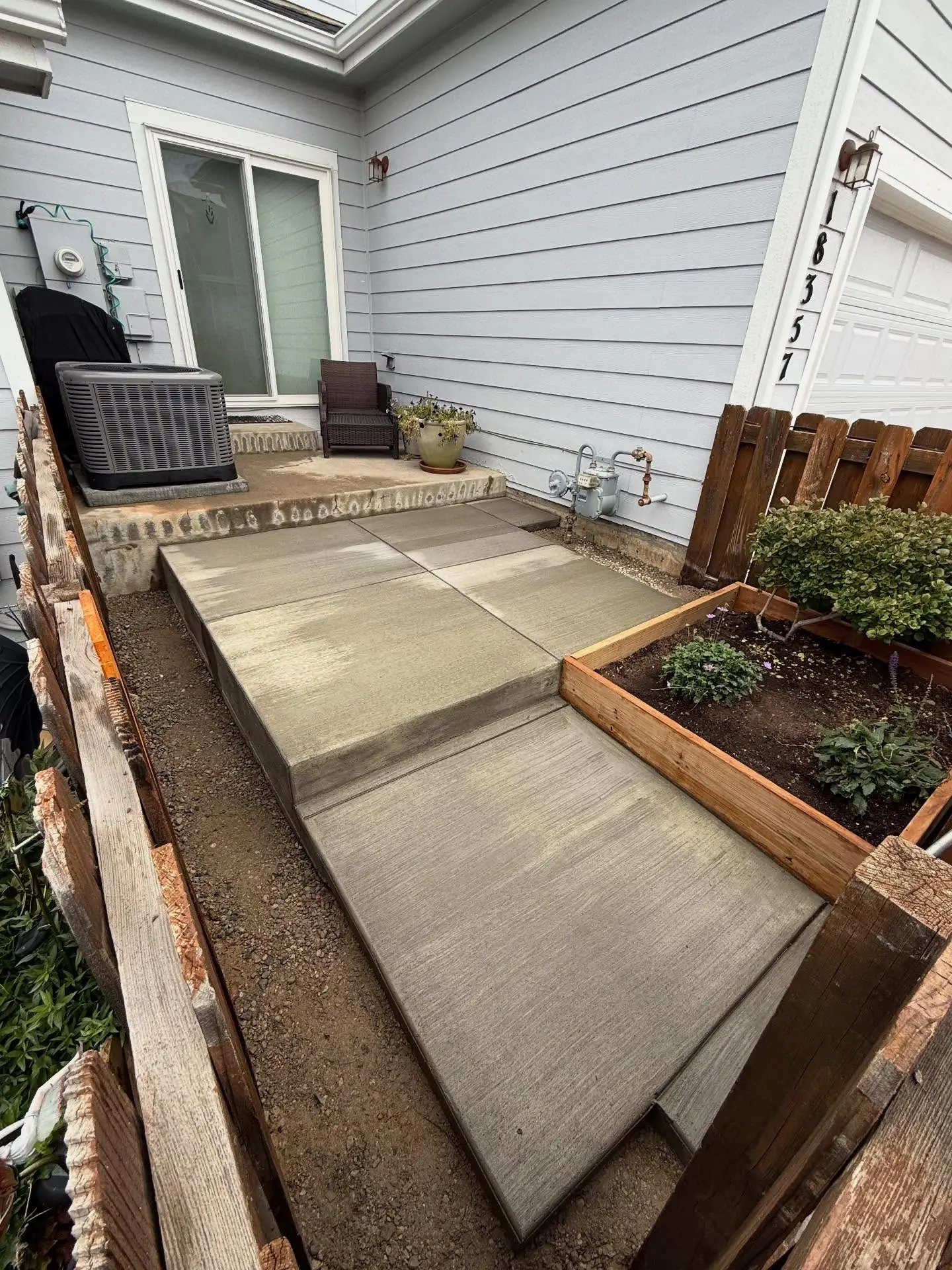
Stamped patterns in stone, slate, or brick looks, or a clean broom-finish standard slab — whichever fits the look and the budget for your yard.
Concrete & hardscape contractor
Patios, walkways, and steps in stamped or standard concrete — installed with the base prep, joints, and sealing that keep Colorado flatwork looking right for years.
A concrete patio is one of the highest-value outdoor upgrades you can make to a Parker home, and stamped concrete gives you the look of stone, brick, or slate at a fraction of the cost of pavers or natural stone. Mountain Ridge Renovations LLC pours both stamped and standard concrete for homeowners across Parker, Douglas County, and the south Denver metro — patios, walkways, front steps, and patio extensions that are built to hold up to real Colorado weather.
The finish is the part everyone sees, but the part that decides how long your slab lasts is underneath it. Our dry, high-altitude climate cycles above and below freezing constantly, and the expansive clay soils common along the Front Range move as they take on and release moisture. That combination is hard on concrete that was poured over a poorly compacted base or without proper joints. We plan every pour around those conditions so the surface you pay for still looks good several winters from now.
Stamped patterns in stone, slate, or brick looks, or a clean broom-finish standard slab — whichever fits the look and the budget for your yard.
Compacted base, air-entrained mix, and control joints cut at proper spacing so the slab can handle Colorado's constant freeze-thaw movement.
Sealing protects color and surface against UV, moisture, and de-icing chemicals — and we walk you through resealing so it keeps its finish.
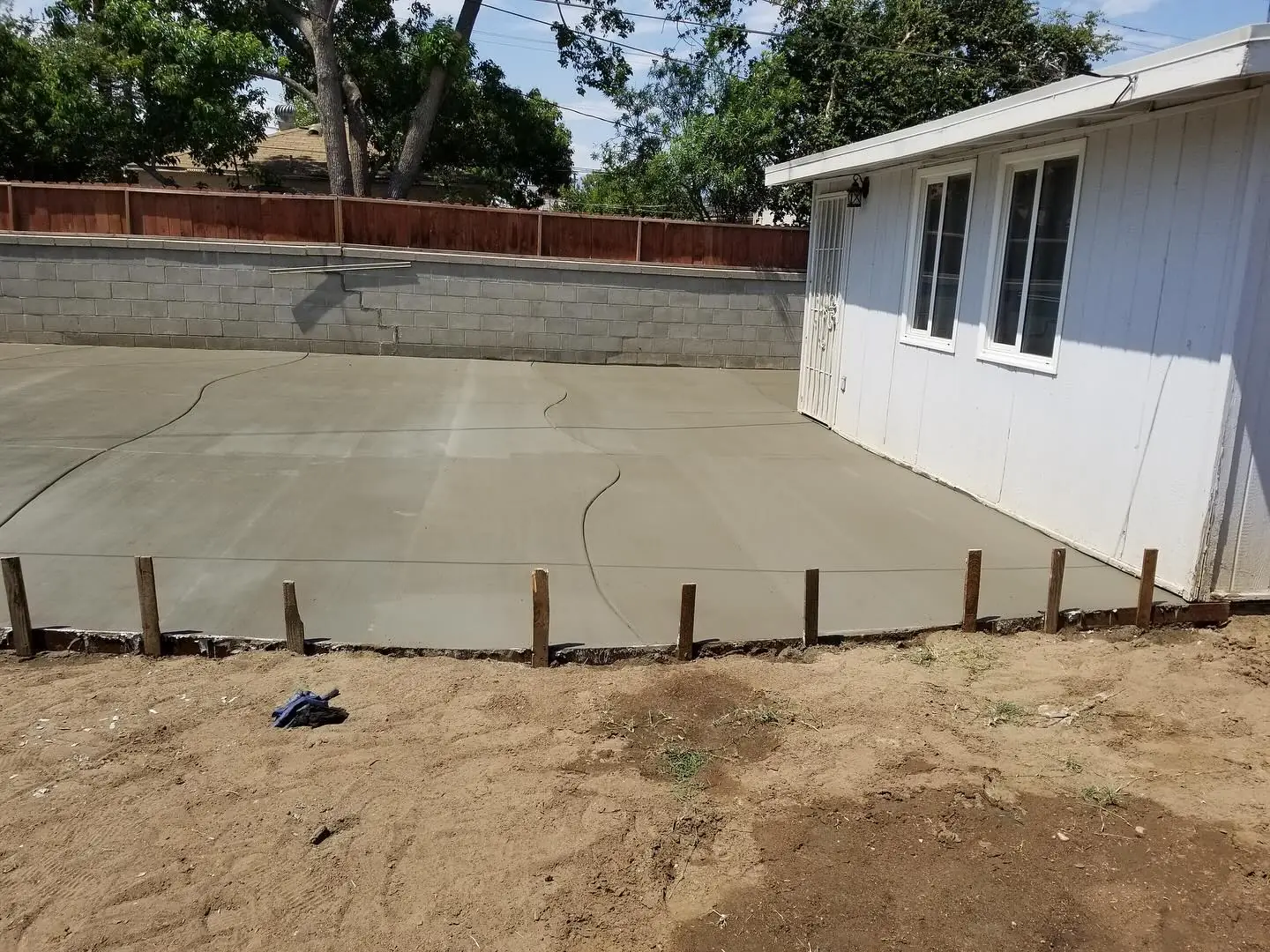
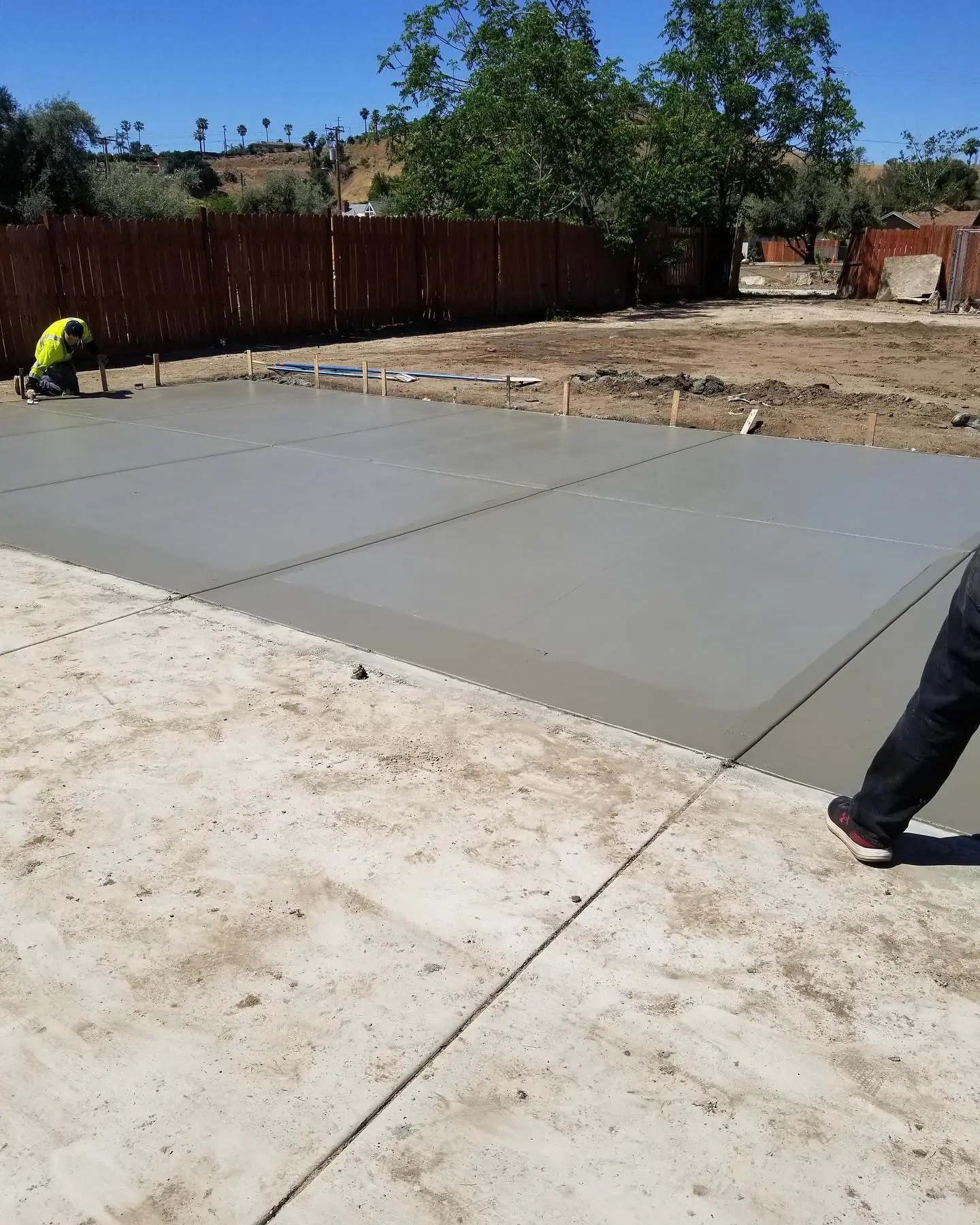
What's included
Good flatwork is a sequence, and skipping steps is where problems start. Here is how a typical patio or walkway comes together.
Base prep and excavation. We excavate to the right depth, then build and compact a gravel base. On the Front Range this is the single most important step — a slab is only as stable as what's under it, and expansive clay soils make a properly compacted base non-negotiable. Grade is set so water drains away from the house and off the surface instead of pooling.
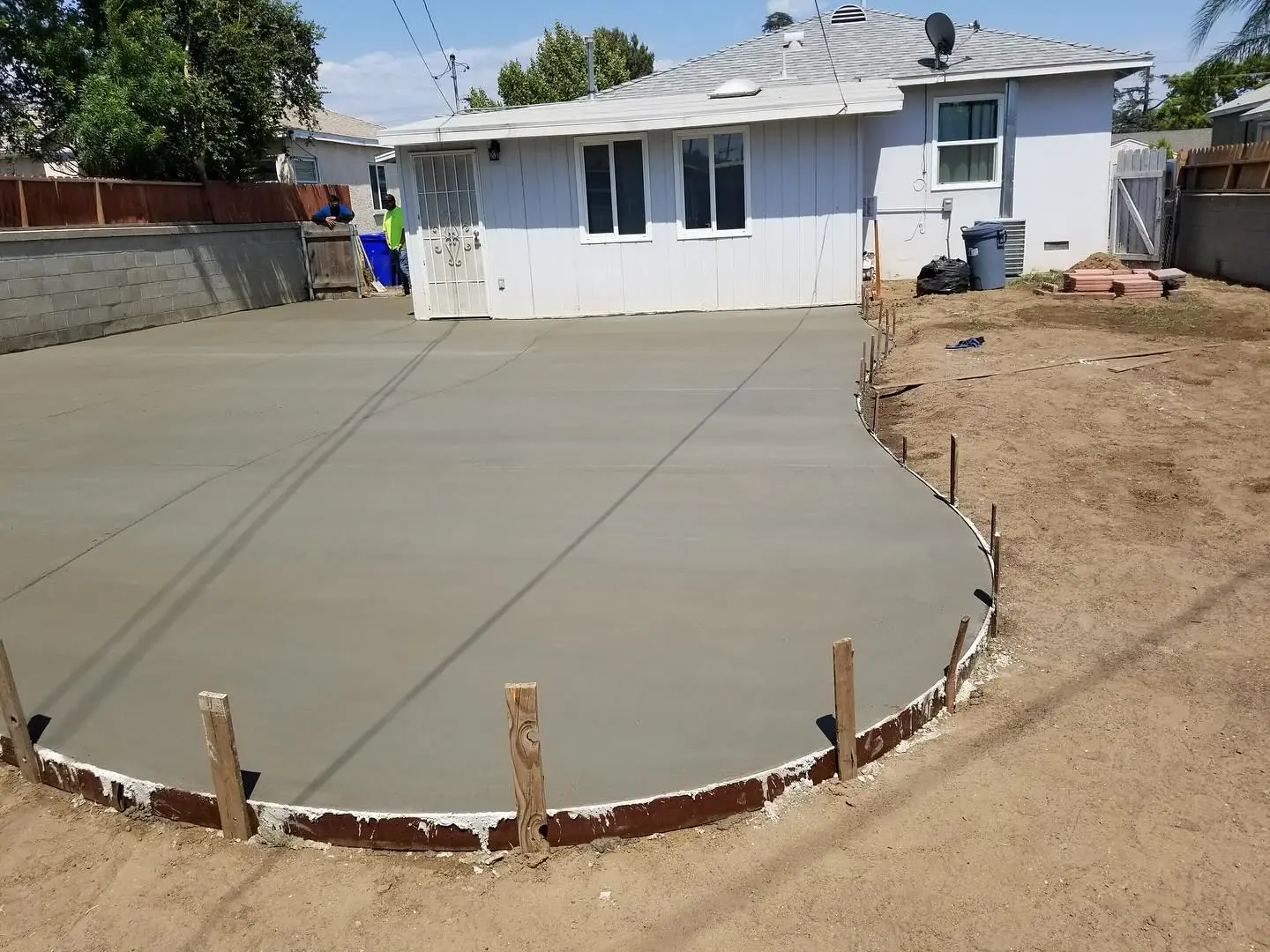
Forming and reinforcement. Clean forms set the shape, edges, and slope. Depending on the project we reinforce with rebar or wire mesh to help tie the slab together and manage cracking. Steps and patio extensions are tied in so they read as one finished surface, not an add-on.
Pour, finish, and stamp. We use an air-entrained mix, which builds microscopic air pockets into the concrete that give it room to handle freeze-thaw expansion — a detail that matters far more here than in milder climates. For stamped work, color and pattern go in while the slab is still workable, whether you want a stone, slate, or brick look. Standard patios get a clean broom finish.
Control joints. Concrete moves and it will crack somewhere — control joints simply decide where. We cut them at proper spacing and depth so any cracking follows the joint lines instead of wandering across the surface. Correct joint layout is one of the biggest reasons a slab still looks clean years later.
Curing and sealing. Concrete needs time to cure before heavy use. Once it has, sealing protects the color and surface from UV, moisture, and the de-icing chemicals that come with Colorado winters. Sealer wears over time, so we'll tell you roughly when to plan a reseal to keep stamped work looking sharp.
What it costs. As a general planning range, stamped concrete typically runs about $12–$25 per square foot and standard broom-finish concrete about $8–$15 per square foot in the Parker and south Denver market. A full concrete patio often lands somewhere around $8,000–$25,000 depending on size and finish. These are planning figures, not a quote — pattern detail, site access, demo of old concrete, and how much base work the site needs all move the number. For a closer look at the trade-offs, see our guide on stamped concrete vs. regular concrete in Colorado. The only accurate figure is a free on-site estimate.
Permits and HOA. Flatwork like a patio or walkway often doesn't require a building permit, but it depends on the scope and your address — confirm with the Town of Parker or the Douglas County building division. If your neighborhood has an HOA, an exterior addition like a patio usually needs architectural (ACC) review and approval first, so it's worth starting that process early. Timing matters too: the best window to pour concrete in Colorado is roughly spring through fall, avoiding freezing temperatures — more on that in our post on the best time for concrete and outdoor projects in Colorado.
Common questions
As a general planning range, stamped concrete usually runs about $12–$25 per square foot and standard broom-finish concrete about $8–$15 per square foot in the Parker and south Denver area. The final number depends on square footage, pattern and color detail, site access, and how much base or demo work the site needs. The only accurate figure is an on-site estimate.
All concrete can develop hairline cracks over time, but the risk is greatly reduced with the right approach: a properly compacted base, an air-entrained mix, control joints cut at the correct spacing, and sealing. Along the Front Range, freeze-thaw cycles and expansive clay soils make base prep and joint placement the most important factors in how the slab holds up.
Flatwork like a patio or walkway often does not require a building permit, but it depends on the scope and your address — confirm with the Town of Parker or the Douglas County building division. If you live in an HOA neighborhood, an exterior addition like a patio usually needs architectural (ACC) review and approval before work starts.
Most residential patios take a few days to about a week of active work — excavation and base prep, forming, the pour and stamping, then joint cutting and cleanup. Concrete needs cure time before heavy use, and sealing is typically done after it has cured. The best window for pouring in Colorado is roughly spring through fall, avoiding freezing temperatures.
Free estimates
Tell Rudy the size of the area, the look you want, and where the project is located. Schedule a free 30-minute estimate or call (303) 961-6094.