- Stamped concrete typically runs $12–$25 per sq ft vs. about $8–$15 for standard concrete.
- You choose the pattern, color, and border — it can mimic stone, slate, brick, or wood plank.
- Sealing is the maintenance: plan to reseal roughly every 2–3 years against Colorado UV and freeze-thaw.
- A slip-resistant additive in the sealer keeps it safe when wet, and the same base-prep rules apply as any slab.
Pattern, color, and border choices
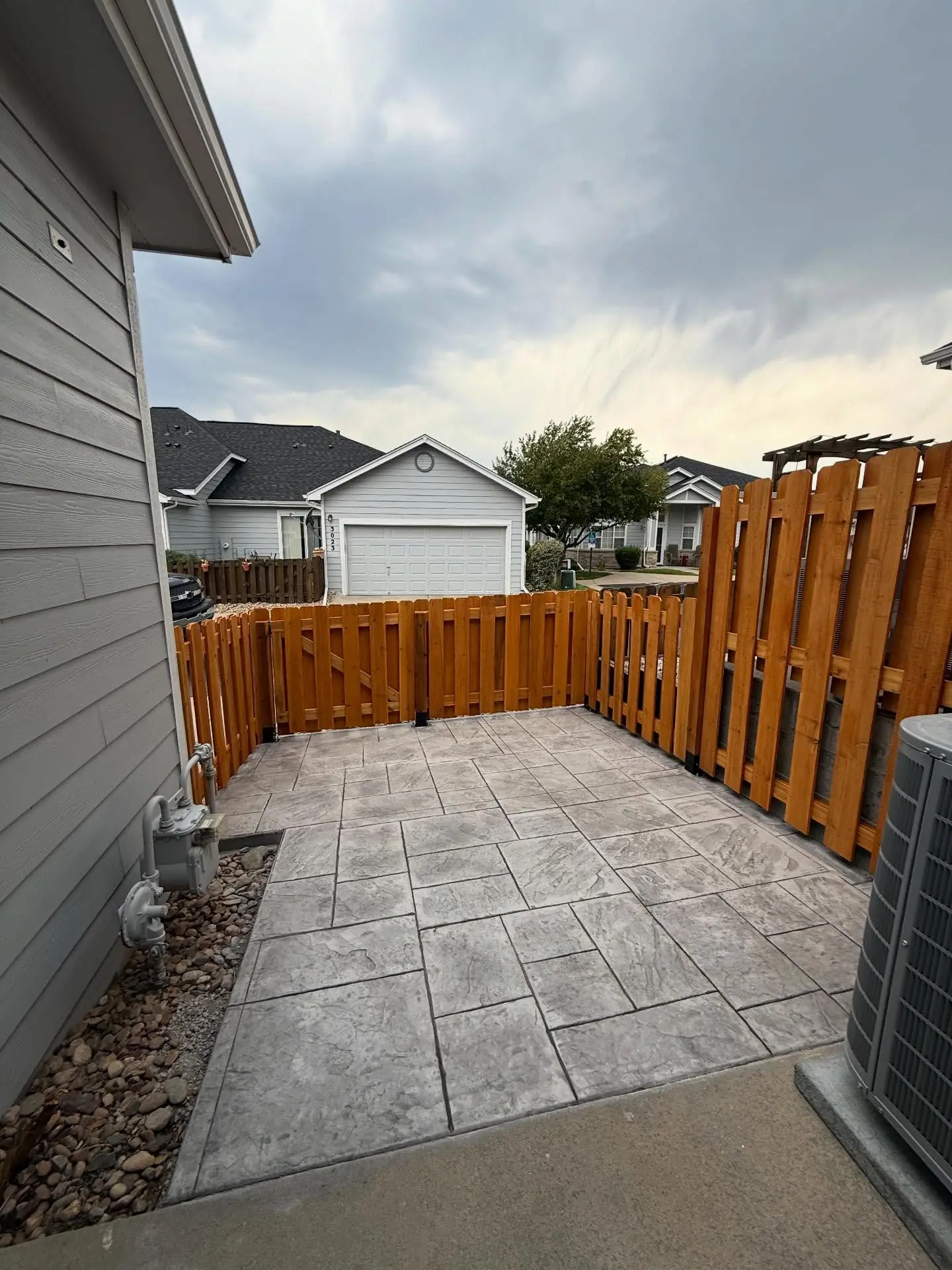
The whole appeal of stamped concrete is the look, and that comes down to three decisions. The pattern is the texture pressed into the wet concrete — common ones mimic random flagstone, cut slate, ashlar (a clean tile grid), cobblestone, or wood plank. The color usually comes from two layers: a base color mixed or broadcast into the concrete, and a release/accent color that settles into the low points of the stamp to give it depth. And the border — a contrasting band or a different pattern around the edge — is what makes a stamped patio look designed instead of just poured.
A good rule for the Front Range is to keep colors in an earthy, natural range. It hides dust and pollen between cleanings, it reads well against our light, and it ages more gracefully than a trendy tone you'll tire of. We'll bring samples and walk the space with you before committing, because the pattern reads very differently on a large slab than it does on a small board.
Sealing and re-sealing in Colorado's climate
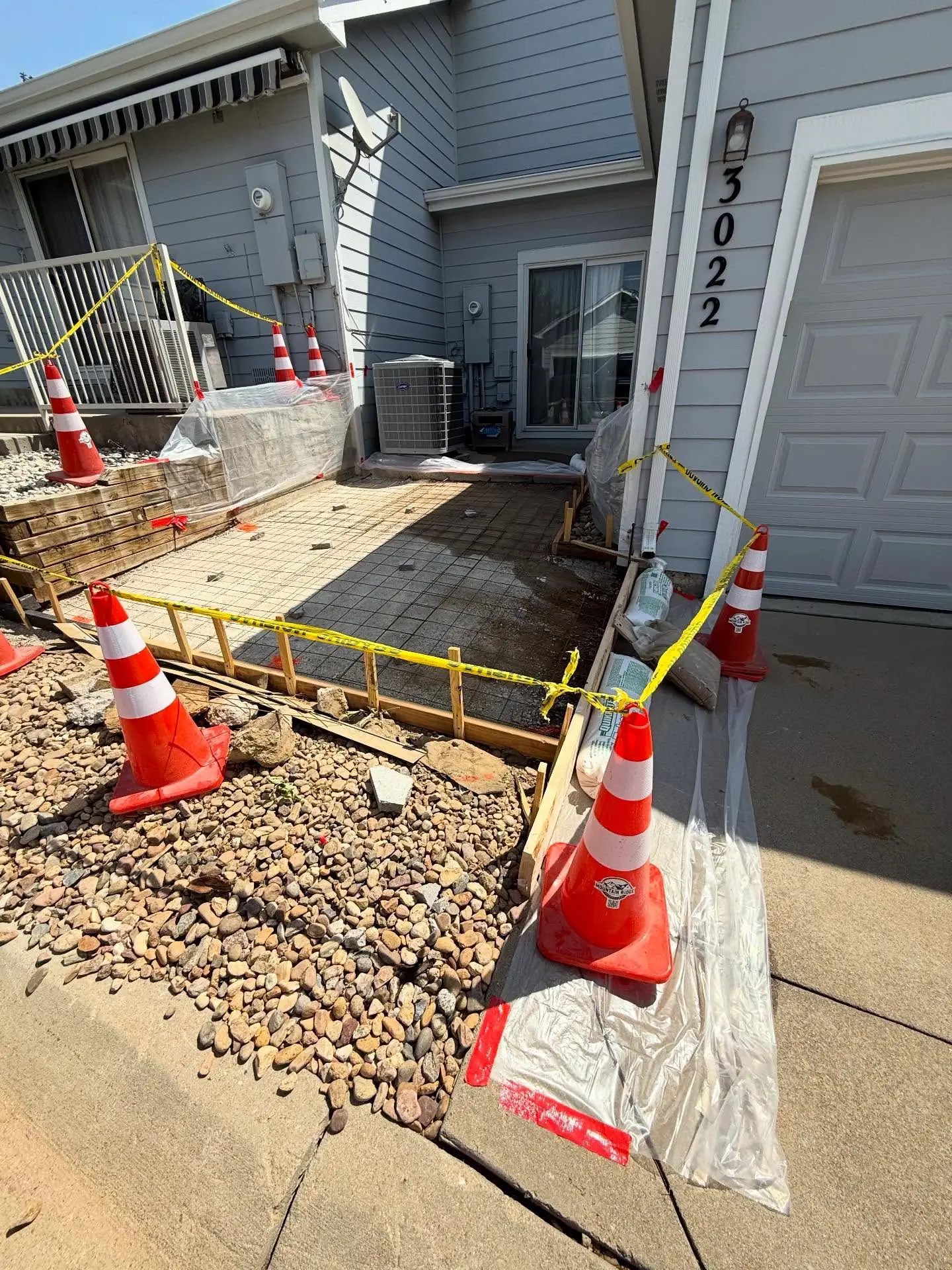
Sealer is what makes stamped concrete last. It locks in the color, brings out the pattern with a low sheen, and forms a barrier against water, stains, and the freeze-thaw cycles that wear at unsealed concrete. On the Front Range, our intense high-altitude UV and dry air are hard on any coating, so the sealer breaks down faster here than it would in a milder climate.
Plan on resealing roughly every two to three years. It's a straightforward job — clean the surface, let it dry, and roll or spray a fresh coat — but it's the difference between a patio that still looks new at year ten and one that's gone dull and blotchy. Skip it too long and you'll see the color fade and the surface start to take on water. If you'd rather not think about maintenance at all, that tradeoff is worth weighing; our stamped vs. regular concrete comparison lays it out side by side.
Slip resistance
The one honest downside of a sealed surface is that it can get slick when wet. This is easy to solve: we mix a fine slip-resistant additive (a clear grit) into the sealer, which gives the surface traction without changing how it looks or feels underfoot. It matters most around hot tubs, pools, shaded areas that stay damp, and any steps. If your patio ties into a step-down, this is a detail we plan up front rather than as an afterthought.
Durability in freeze-thaw weather
Stamped concrete holds up well to Colorado winters when the fundamentals are right — the decorative surface doesn't change the physics of a slab. That means the same things that make any concrete last: a properly compacted base over our expansive clay soils, an air-entrained mix so freezing water has room to expand, control joints cut to manage cracking, and footings set below the local frost line where anything structural is involved (often around 30 to 36 inches — confirm locally). Get those right and the sealer maintained, and a stamped patio ages beautifully. For the base and drainage side of the job, see our concrete patio extension guide.
What a stamped concrete patio costs near Parker
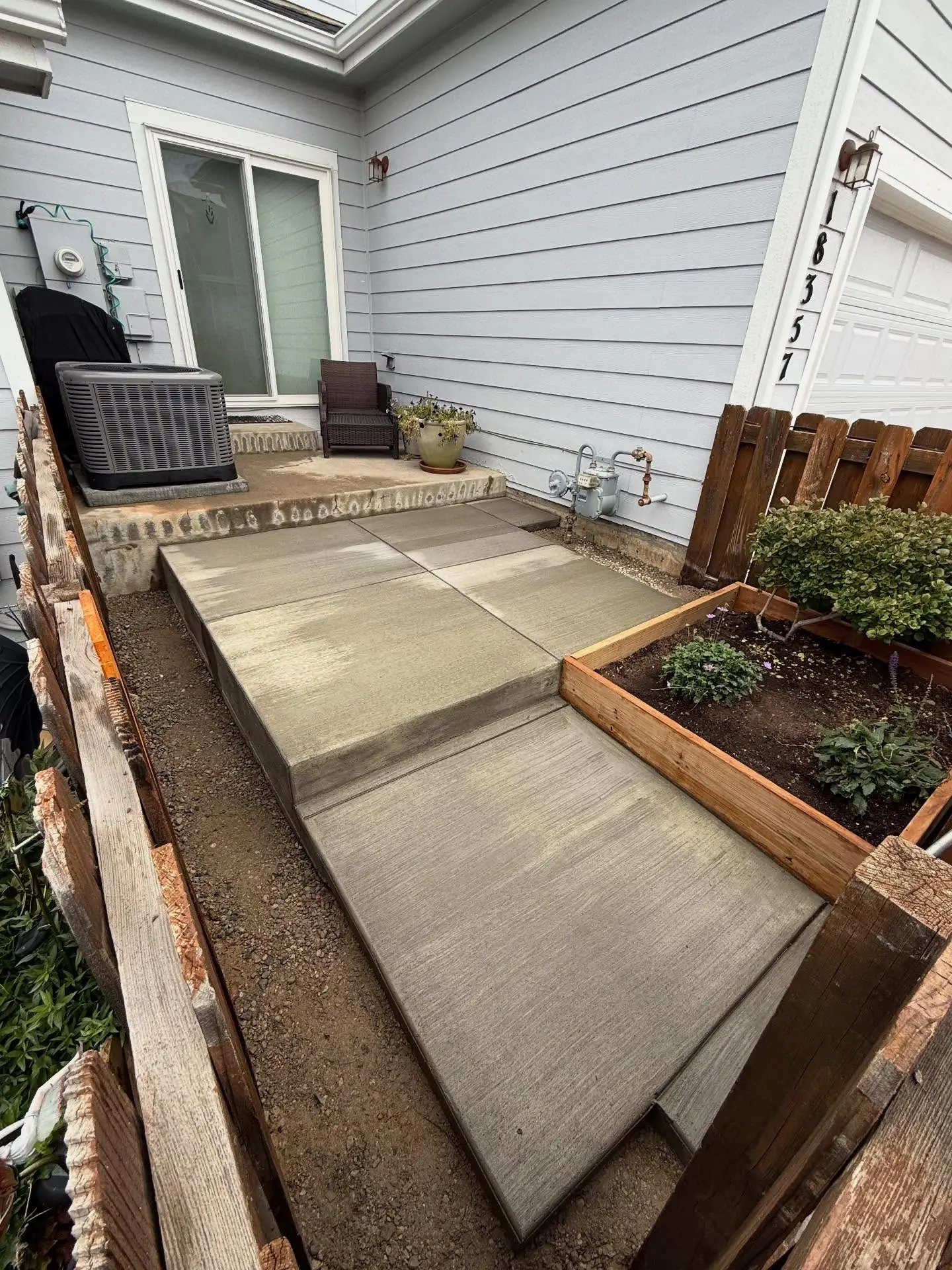
Here are honest planning ranges for the Parker and south Denver market. These are general figures, not a quote — pattern complexity, number of colors, borders, and base prep all move the number.
| Finish | Typical range | What drives the price |
|---|---|---|
| Standard broom-finished concrete | ~$8–$15 / sq ft | Size, base prep, access |
| Stamped concrete (single color) | ~$12–$18 / sq ft | Pattern, base prep |
| Stamped concrete (multi-color, borders) | ~$18–$25 / sq ft | Added colors, custom borders, detail work |
Across a whole patio, most projects land in the $8k–$25k range depending on size and finish. If timing is on your mind, our guide to the best time of year for concrete in Colorado covers when to schedule the pour. You can also read more about our decorative concrete work on the stamped concrete service page.
Thinking about a stamped patio in Parker?
Mountain Ridge Renovations LLC installs stamped and decorative concrete across Parker and south Denver — pattern and color selection, proper base prep, sealing, and honest estimates.
Schedule a Free EstimateStamped concrete FAQs
How much does a stamped concrete patio cost in Parker, CO?
Stamped concrete typically runs about $12 to $25 per square foot, compared with roughly $8 to $15 for standard broom-finished concrete. The price depends on the pattern, number of colors, borders, and base prep. An on-site estimate is the only accurate figure.
How often does stamped concrete need to be resealed in Colorado?
Plan on resealing roughly every two to three years in our climate. Colorado's intense high-altitude UV, dry air, and freeze-thaw cycles wear the sealer faster than a milder climate, and the sealer is what protects the color and surface. Keeping up with it is the biggest factor in how good the patio looks over time.
Is stamped concrete slippery?
A smooth sealer can be slick when wet, but that is easily managed. We add a slip-resistant additive to the sealer, which gives the surface grip without changing the look. It matters most around pools, hot tubs, and steps where the surface gets wet.
Is stamped concrete durable in freeze-thaw weather?
Yes, when it is built correctly — a properly compacted base, an air-entrained mix, control joints, and a maintained sealer let stamped concrete handle Colorado's freeze-thaw cycles well. Skipping the base prep or letting the sealer fail is what leads to surface scaling and cracking.