
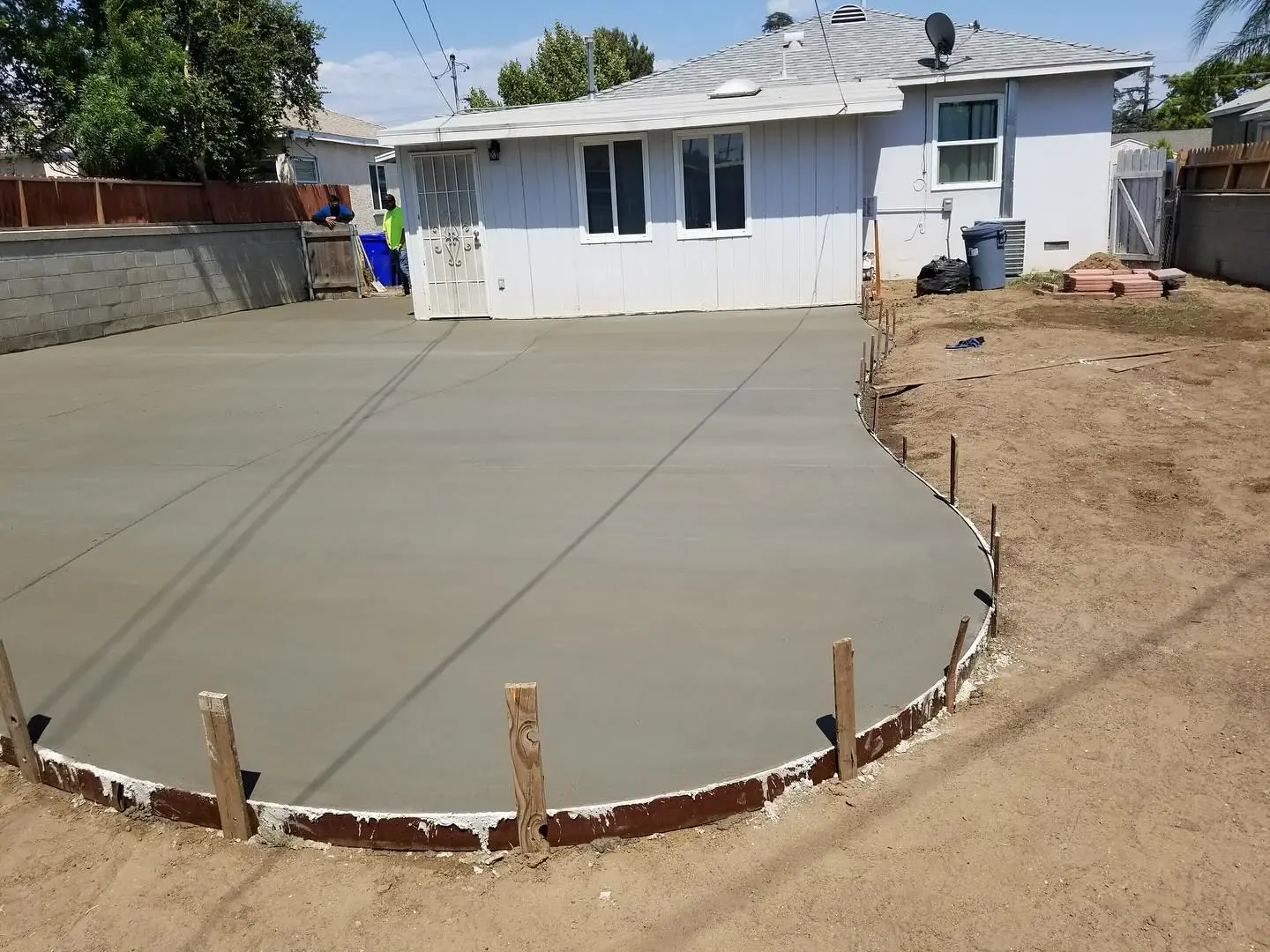
- Standard concrete (~$8–$15/sq ft) is the value pick: clean, functional, low-upkeep.
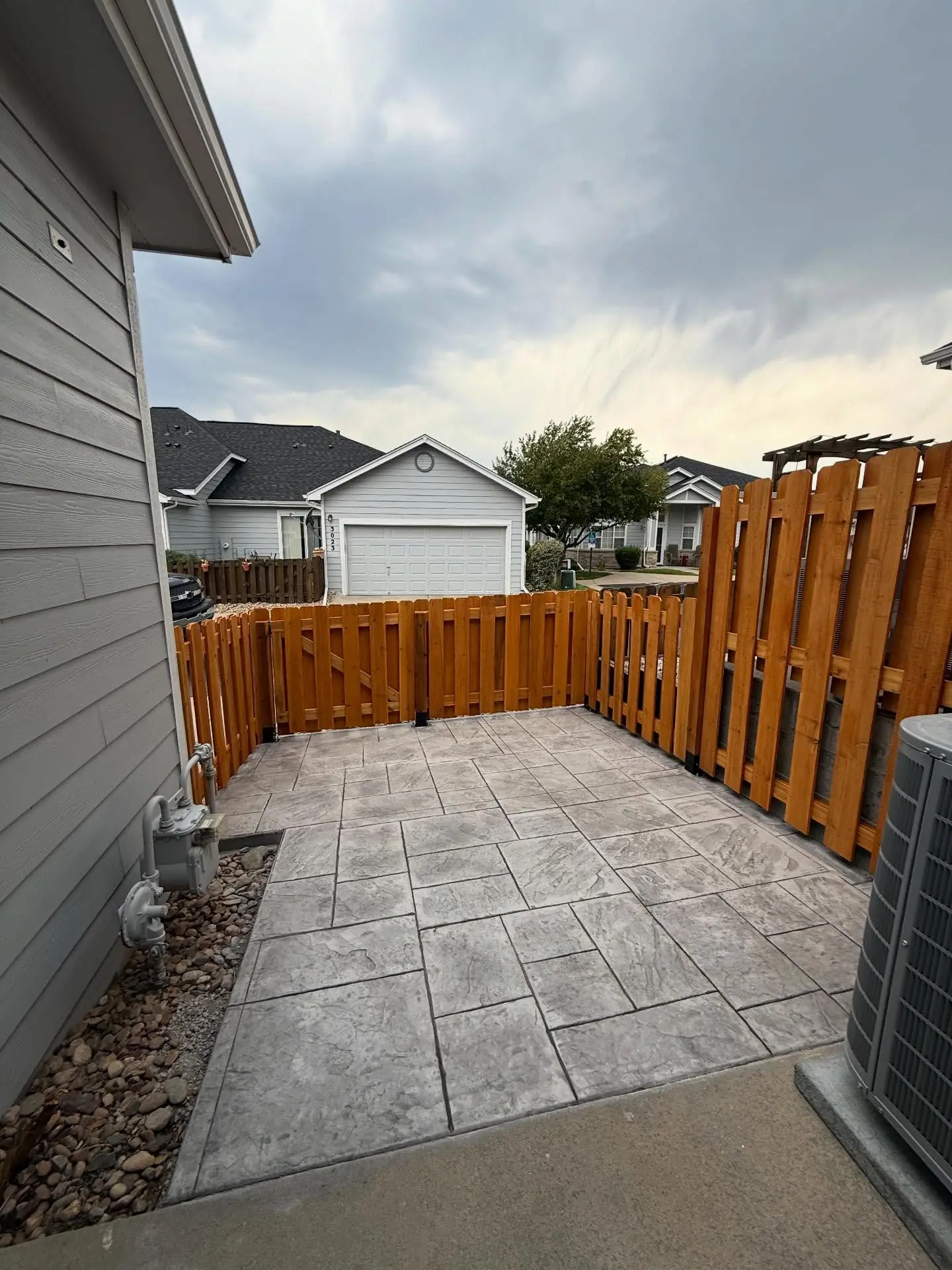
- Stamped concrete (~$12–$25/sq ft) buys the look of stone or slate as one seamless surface.
- The structure underneath is identical — both need the same base, mix, and control joints to survive freeze-thaw.
- The real dividing line is maintenance: stamped needs resealing every 2–3 years; standard is more forgiving.
What's actually different (and what isn't)
Here's the part most comparisons skip: below the surface, stamped and standard concrete are the same slab. Same excavation, same compacted base over our expansive clay soils, same air-entrained mix for freeze-thaw, same control joints, same footings below the frost line where anything structural is involved. The difference is entirely in the top layer — with stamped concrete, we press a textured mat into the wet surface and add color, so it takes on the look of flagstone, slate, brick, or wood plank. A standard patio gets a broom finish for grip and a clean, uniform surface.
That's why this decision is really about look, cost, and upkeep rather than "which one lasts." Both last when they're built right. Both fail when the base prep is skipped. The finish you choose changes the price and the maintenance rhythm, not the bones of the job.
Side-by-side comparison
Here's the honest breakdown across the factors homeowners actually weigh. Costs are general planning ranges for the Parker and south Denver market, not a quote.
| Factor | Stamped concrete | Regular (broom-finish) concrete |
|---|---|---|
| Cost | ~$12–$25 / sq ft | ~$8–$15 / sq ft |
| Look | Stone, slate, brick, or wood-plank patterns; custom color & borders | Clean, uniform, understated gray |
| Maintenance | Reseal every ~2–3 years to protect color & surface | Optional sealing; more forgiving if skipped |
| Durability | Same slab; excellent with proper base & sealer | Same slab; excellent with proper base |
| Slip resistance | Good with slip additive in the sealer | Good — broom texture gives natural grip |
| Resale appeal | Strong first impression; reads as a designed space | Seen as clean and functional |
Freeze-thaw performance
On the Front Range we get frequent freeze-thaw cycles — water works into the surface, freezes overnight, expands, and thaws by afternoon. Over years, that cycle is what scales and spalls poorly built concrete. Both finishes handle it the same way when the fundamentals are right: an air-entrained mix (tiny air pockets that give freezing water room to expand), a compacted base that drains instead of trapping water, and control joints that steer cracking.
The one climate-specific edge for stamped concrete is that its sealer adds a layer of protection against water intrusion — as long as you keep it fresh. A stamped patio with a failed, worn-out sealer is actually more exposed than a properly built standard slab, because water can sit in the low points of the pattern. That brings us to the real tradeoff.
Sealing and maintenance tradeoffs
This is the honest dividing line. Standard concrete is close to set-and-forget: you can seal it for extra protection, but if a couple of years slip by, it's forgiving. Stamped concrete asks for a resealing habit — roughly every two to three years in Colorado's UV and dry air — because the sealer is doing double duty, protecting both the color and the surface. It's not hard or expensive work, but it is a recurring task you're signing up for.
So the practical question isn't "which looks better" — most people prefer the stamped look. It's "will I keep up with the maintenance?" If yes, stamped rewards you with years of great-looking patio. If you'd rather not think about it, standard concrete is the lower-stress choice. Our stamped concrete patio guide goes deeper on the sealing schedule, and the concrete patio extension guide covers the base and drainage side that applies to both.
Which to choose, and when
A few rules of thumb from the field:
- Choose stamped when the patio is a focal point of the yard, when you want curb appeal for resale, or when you'd otherwise consider pricey pavers — stamped gives a similar look with no joints for weeds.
- Choose standard for large areas where budget matters most, for utilitarian surfaces (a shed pad, a side walkway, a driveway apron), or when low maintenance is the priority.
- Split the difference by broom-finishing the main field and stamping only a border or feature band — a designed look at a lower cost.
Whichever way you lean, timing the pour matters in our climate; see our best time of year for concrete in Colorado guide, or read more on our stamped concrete service page.
Not sure which finish fits your yard?
Mountain Ridge Renovations LLC pours both stamped and standard concrete across Parker and south Denver. We'll walk your space, show samples, and give you an honest recommendation and estimate.
Schedule a Free EstimateStamped vs. regular concrete FAQs
Is stamped concrete worth the extra cost over regular concrete?
It comes down to what you value. Stamped costs about $12 to $25 per square foot versus roughly $8 to $15 for standard concrete, and it delivers the look of stone or slate as one durable surface. If appearance matters and you don't mind resealing every few years, it's usually worth it. If you want the lowest cost and least upkeep, standard concrete is the practical choice.
Does stamped concrete hold up as well as regular concrete in Colorado?
The structure underneath is identical, so with the same compacted base, air-entrained mix, and control joints, both handle freeze-thaw the same way. The difference is maintenance: stamped relies on a sealer that needs refreshing every two to three years, while standard is more forgiving if you skip a cycle.
Which adds more resale value, stamped or regular concrete?
Any well-built, usable outdoor living space helps resale. Stamped concrete tends to make a stronger first impression because it reads as a finished, designed space, while standard concrete is seen as clean and functional. Neither is a bad choice; stamped simply leans more toward curb appeal.
Can you stamp only part of a patio to save money?
Yes. A common approach is to broom-finish the main field and stamp only a border or feature band, which gives a decorative accent at a lower cost than stamping the whole surface. We can walk through options like this during an on-site estimate.