- Installed turf generally runs $8–$18 per sq ft depending on product, base work, and edging.
- The base and drainage under the turf decide how long it lasts and whether it stays firm and flat.
- A concrete curb locks in the base, keeps rock and mulch out of the grass, and gives a crisp, permanent edge.
- Turf is a strong low-water, pet-friendly choice for our semi-arid climate — but exterior changes usually need HOA approval first.
The base and drainage do the real work
Most turf that fails didn't fail because of the grass — it failed because of what's under it. A good install starts by removing the sod and native soil, then building a compacted aggregate base, usually a road base topped with a finer leveling layer, graded to shed water and compacted in lifts. That base is what keeps the surface firm, flat, and free of the low spots that puddle or ripple later.
Drainage matters more here than people expect. The Front Range has expansive clay soils that hold water and heave with our frequent freeze-thaw cycles, so the base has to move water away instead of trapping it. We slope the base to daylight or to existing drainage, and quality turf has a permeable backing so water passes straight through. Get this wrong and you get soft edges, weeds at the seams, and standing water after a spring storm.
Why a concrete curb is worth it
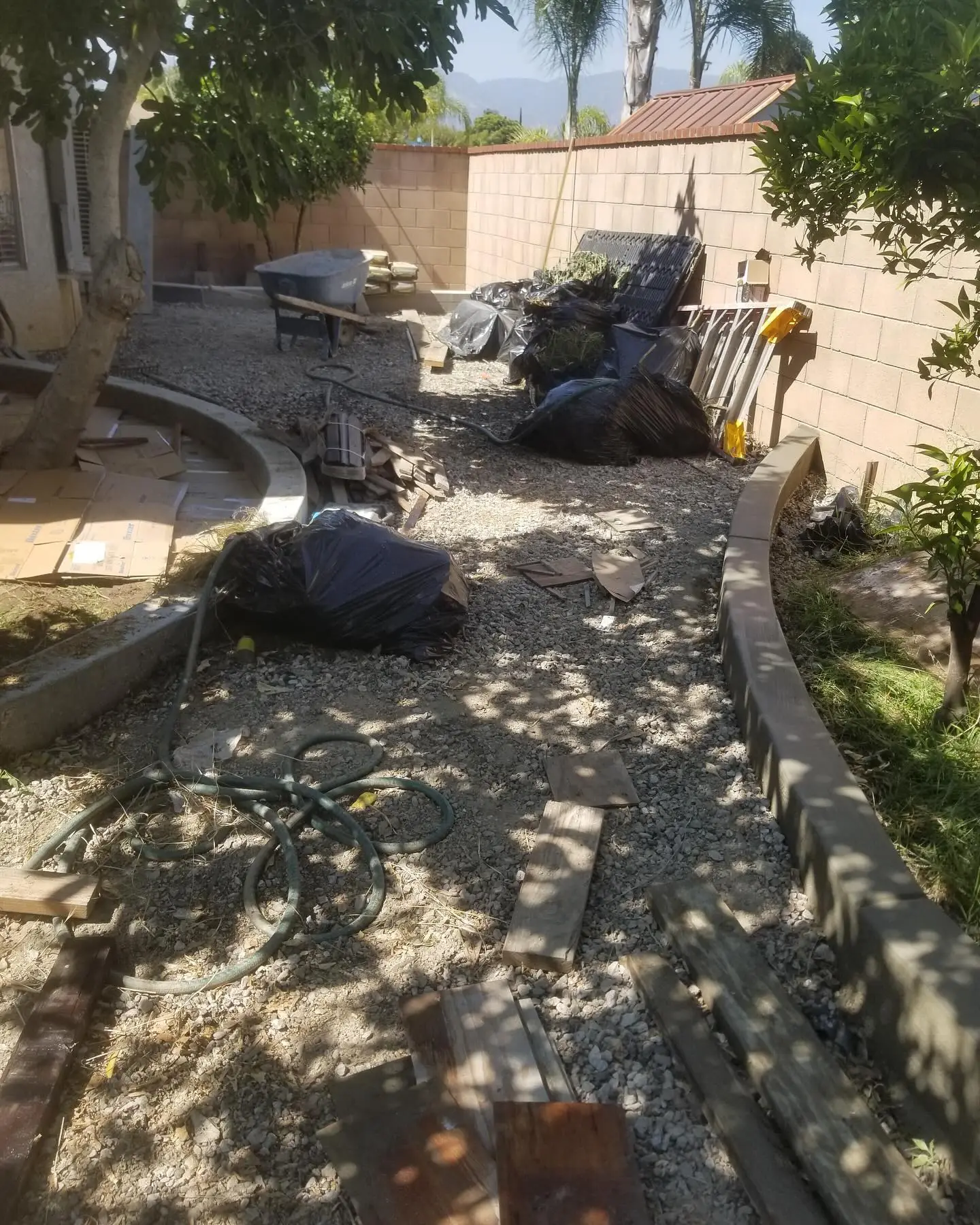
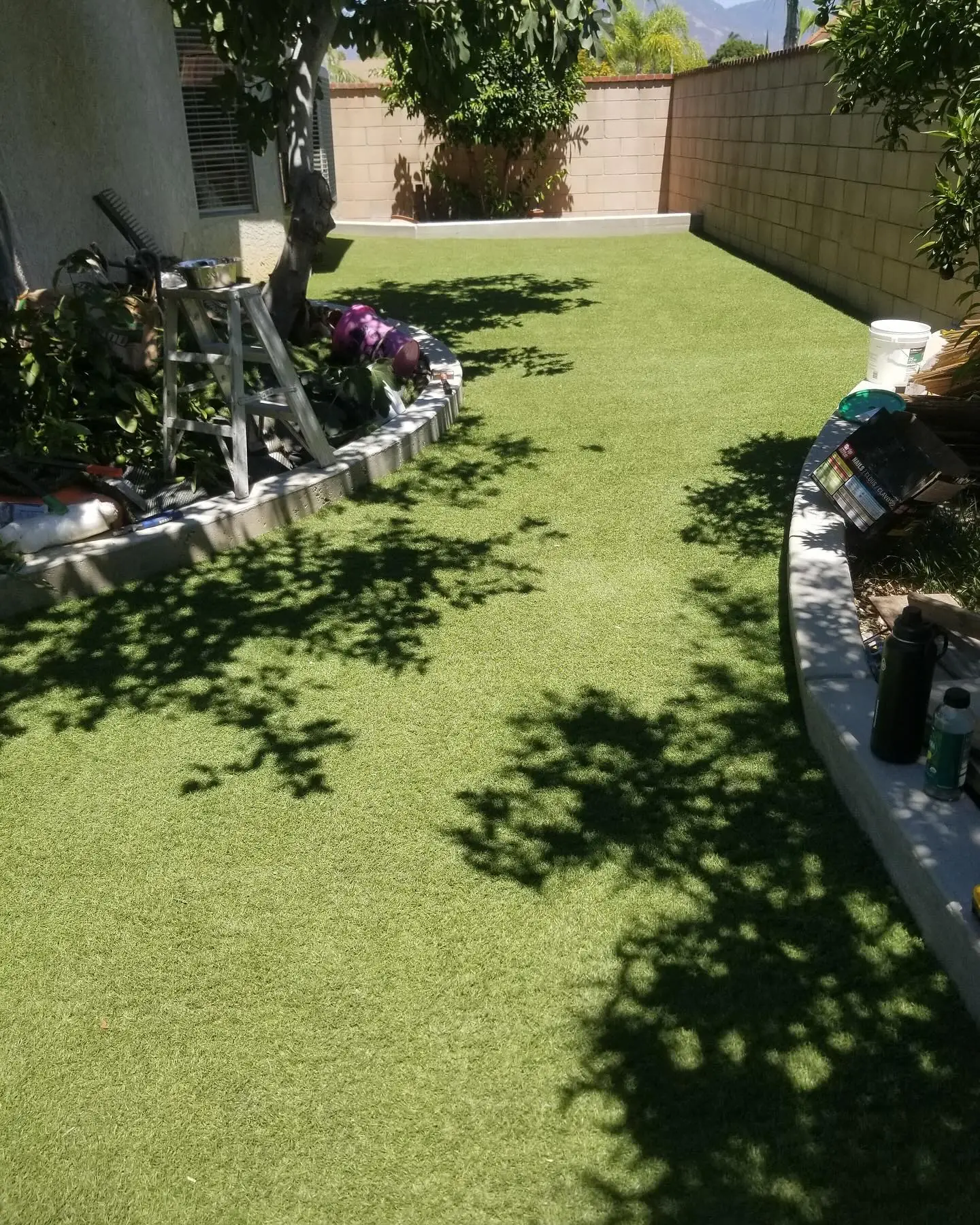
The edge is where a turf job either looks sharp or looks cheap. A poured concrete curb around the turf gives you a clean, permanent border that does three jobs at once: it holds the compacted base in place so the edges don't slump, it stops landscape rock and mulch from migrating into the grass, and it defines a crisp line against beds, walkways, and patios. A curved curb, like the one in the project above, also lets you soften a boxy yard into a shape that actually looks designed.
Because it's real concrete, the same Colorado rules apply: it needs a compacted base, control joints, and an air-entrained mix so it tolerates our freeze-thaw winters. If you're already planning hardscape, it can make sense to combine the curb with a concrete patio extension and pour them in the same window. For timing, our guide on the best time for concrete and outdoor projects in Colorado covers when to schedule.
Infill and turf selection
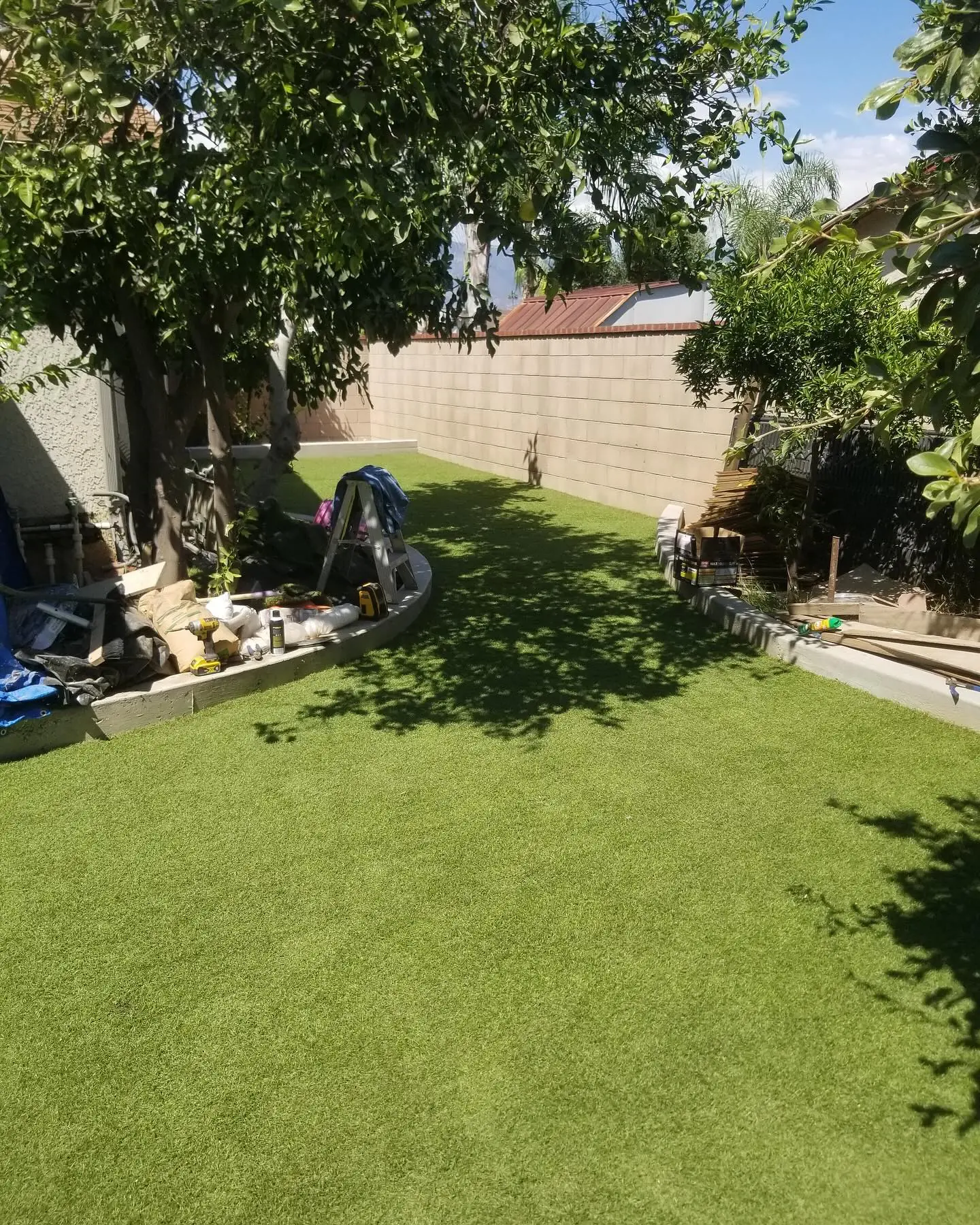
Turf is brushed with an infill — usually a silica sand, or a coated antimicrobial sand for pet areas — that weighs the turf down, keeps the blades standing up, and protects the backing from UV. Our high-altitude sun is intense, so infill and UV-stable fibers matter: cheap turf fades and mats down fast in Colorado light. Choosing the right pile height and face weight for the use — play area, dog run, or low-traffic accent — is the difference between turf that still looks good in year eight and turf that lies flat by year three.
Matching the turf to your yard
For high-traffic and pet zones, we lean toward a denser, shorter pile that recovers well and drains fast. For a front-yard accent that just needs to look like a tidy lawn, a taller landscape blade reads more natural. Either way, the seams should be glued and nailed tight and the turf stretched so it lies flat without wrinkles.
Turf for dogs and dog runs
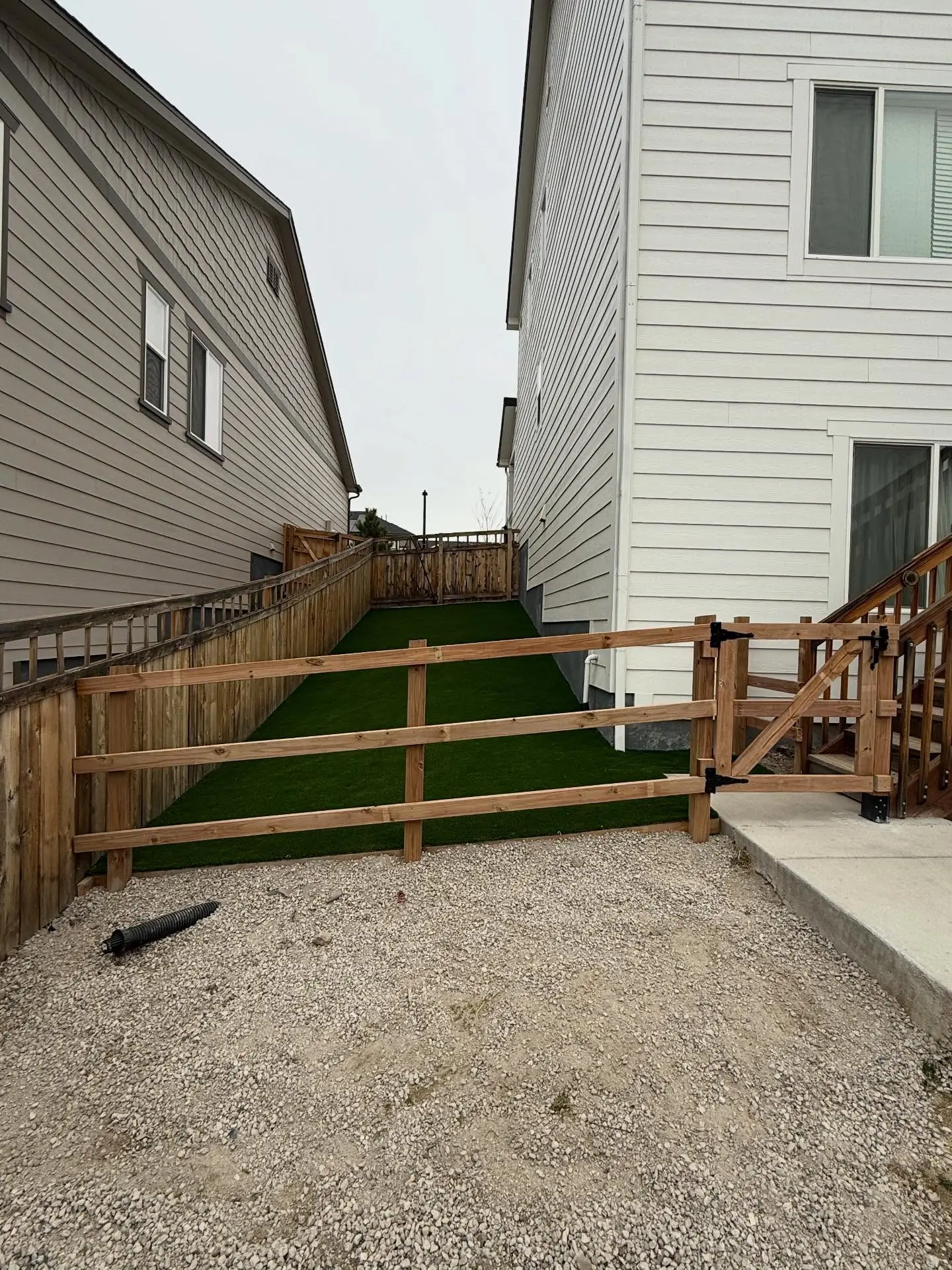
Turf is one of the best surfaces for dogs, and dog runs are among the most common turf requests we get. The advantages are simple: no mud, no dead urine spots, no holes dug in the lawn. The details that make it work are drainage and infill. Pet-grade turf over a free-draining base lets urine flush straight through, and an antimicrobial infill keeps odor down; a quick hose-off rinses it clean.
Pairing turf with a fence gives you a contained, low-maintenance run that stays usable through mud season. We often build the two together — see our Parker fence contractor guide for how the fencing side comes together. The result is a yard the dogs can use hard without wrecking it.
Low-water benefits in our semi-arid climate
Parker sits in a semi-arid climate where summer watering is a real cost and water-wise landscaping is increasingly the norm. Turf eliminates the biggest water draw in most yards — the lawn — while staying green year-round with no mowing, fertilizing, or reseeding. For homeowners tired of babysitting a bluegrass lawn through July, or fighting brown patches on a slope, turf is a practical answer that also frees up weekends.
It isn't the right call for every square foot. Large open lawns, kids' sports fields, and heavy shade all have trade-offs worth talking through. But for front-yard accents, tight side yards, dog runs, and patio surrounds, turf usually pays off in both water and upkeep.
Cost, lifespan & HOA approval
Homeowners want a number, so here are honest planning ranges for the Parker and south Denver market. These are general figures, not a quote — the real cost depends on the turf product, how much base and drainage the yard needs, and add-ons like a concrete curb or pet-grade infill.
| Item | Typical range | What it covers |
|---|---|---|
| Artificial turf, installed | $8–$18 / sq ft | Base prep, turf, infill, seaming, and stretch |
| Concrete curb / edging | Priced per project | Poured border with base, control joints, air-entrained mix |
| Pet-grade upgrade | Add-on | Antimicrobial infill and drainage detailing for dog runs |
Quality turf typically lasts around 15 to 20 years with basic care — occasional brushing, rinsing, and keeping debris off. The two things that shorten that life are a weak base and cheap, UV-unstable fiber, which is exactly why the prep and product selection matter more than the sticker price.
One local step you can't skip: HOA approval. Many Parker and Douglas County neighborhoods have architectural (ACC) review, and swapping lawn for turf is an exterior change that usually needs sign-off first. Confirm your covenants and submit any required application with your HOA before we start. Want the details handled? Our artificial turf installation service page walks through the full process.
Thinking about turf in Parker?
Mountain Ridge Renovations LLC installs artificial turf, concrete curbing, and dog runs for Parker and south Denver homeowners — with a proper base, clean edges, and honest estimates.
Schedule a Free EstimateArtificial turf FAQs
How much does artificial turf cost in Parker, CO?
Installed artificial turf generally runs about $8 to $18 per square foot in the Parker and south Denver area. The range depends on the turf product, how much base work and drainage the yard needs, and add-ons like a concrete curb or pet-grade infill. The only accurate figure is an on-site estimate.
Why add a concrete curb around artificial turf?
A concrete curb gives the turf a clean, permanent edge that holds the base material in place, keeps mulch and rock from migrating into the grass, and creates a crisp border against beds and patios. It also makes the whole installation look intentional and finished rather than like a loose mat laid on the ground.
Is artificial turf good for dogs?
Yes. Pet-grade turf over a properly draining base is a durable, low-mud surface for dog runs. The key is drainage and the right infill so urine flushes through and rinses clean, plus a permeable backing. Done right it stays usable in wet weather and is easy to hose off.
Does artificial turf need HOA approval in Parker?
Often yes. Many Parker and Douglas County neighborhoods have an HOA with architectural (ACC) review, and replacing lawn with turf is an exterior change that usually needs approval first. Confirm your covenants and submit any required application with your HOA before installation begins.