
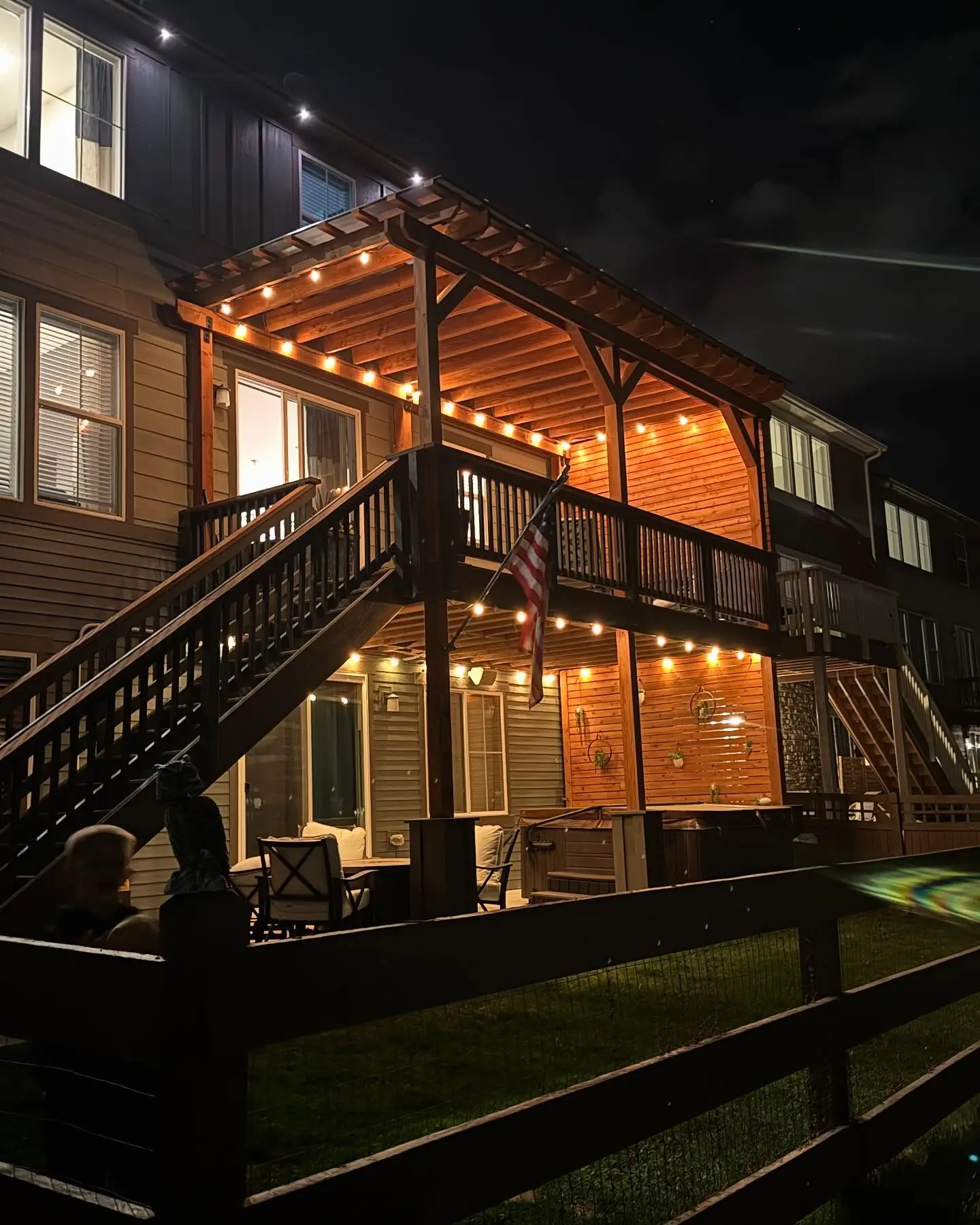
- For one bad sightline, a privacy wall or screen usually beats a taller fence — less material, better looks.
- A solid panel catches wind like a sail, so anchoring and bracing (or a slatted design) matter more than height.
- Match the material and finish to your deck and our intense UV so it ages well, not gray and dry.
- A privacy wall is an exterior change — HOA approval and any permit come first.
Start with the sightline, not the fence
The most common mistake in a privacy project is solving the wrong problem. People assume they need a taller fence around the whole yard when what actually bothers them is one specific view — the neighbor's deck, a second-story window, a hot tub that's exposed to the street. Sit where you actually spend time and look at what you want to block. That single sightline is the whole design brief.
Once you know the exact spot, the solution is usually smaller and cheaper than a full fence upgrade. A short wall in the right place, at the right height, blocks the view where you sit without turning the yard into a box. That's the difference between adding privacy and overbuilding.
Privacy wall vs tall fence vs screen
There are three honest ways to add privacy, and they solve different problems:
- Privacy wall. A solid, finished section — often built onto a deck or patio — that blocks a specific view where you sit. Best when you need real privacy in one zone and want it to look like part of the house.
- Tall fence. Raising the whole perimeter. The right move when the entire yard is exposed, but it's the most material and most subject to HOA height limits. For a full fence, see our Parker fence contractor guide.
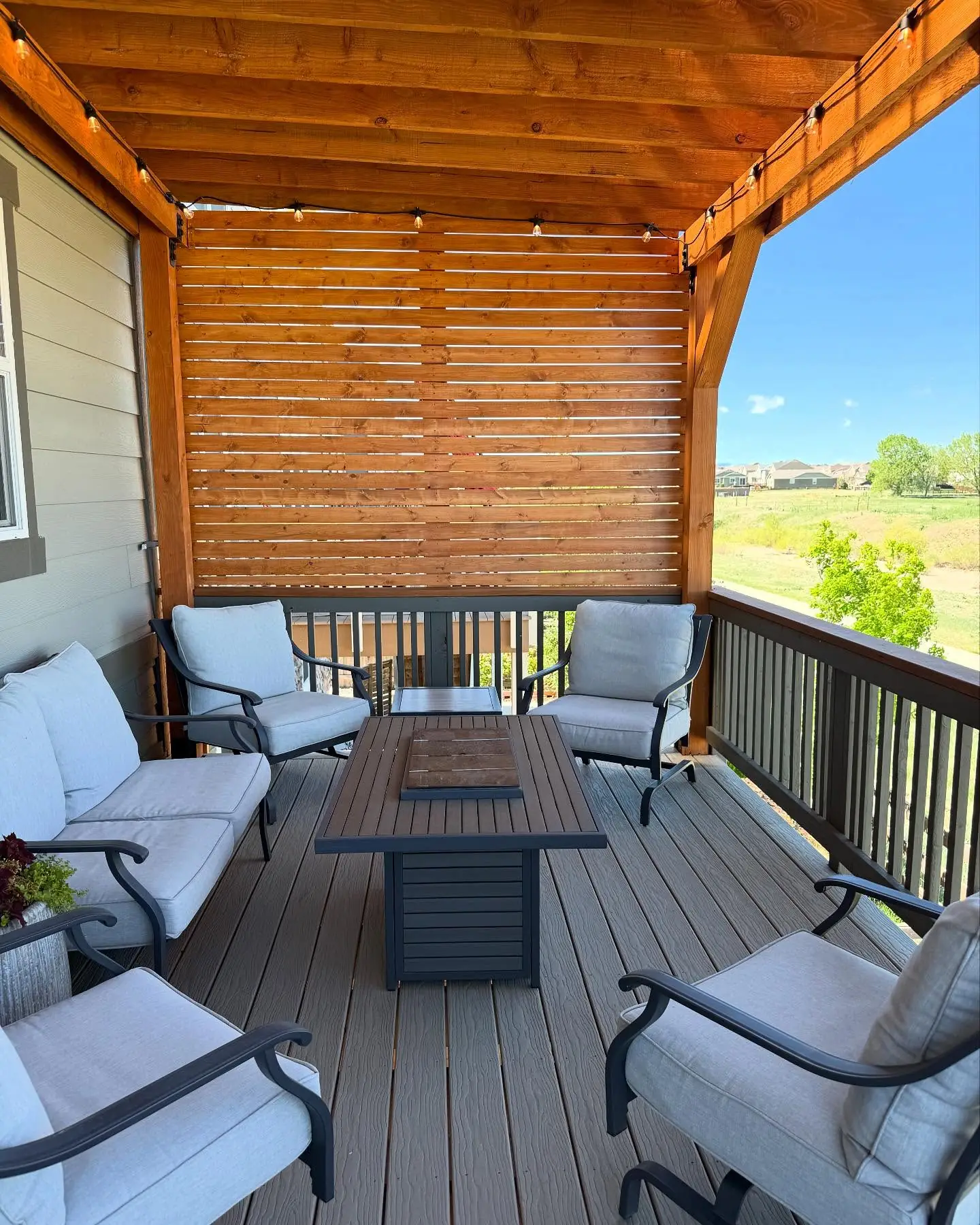
- Screen. A lighter, often slatted or louvered panel that softens a view and passes some air and light. Good for patios and seating areas where you want dappling, not a solid wall.
For most South Denver decks and patios, a targeted wall or screen wins. It costs less, reads as intentional, and doesn't fight the wind the way a tall solid fence does.
Wind is the real design constraint
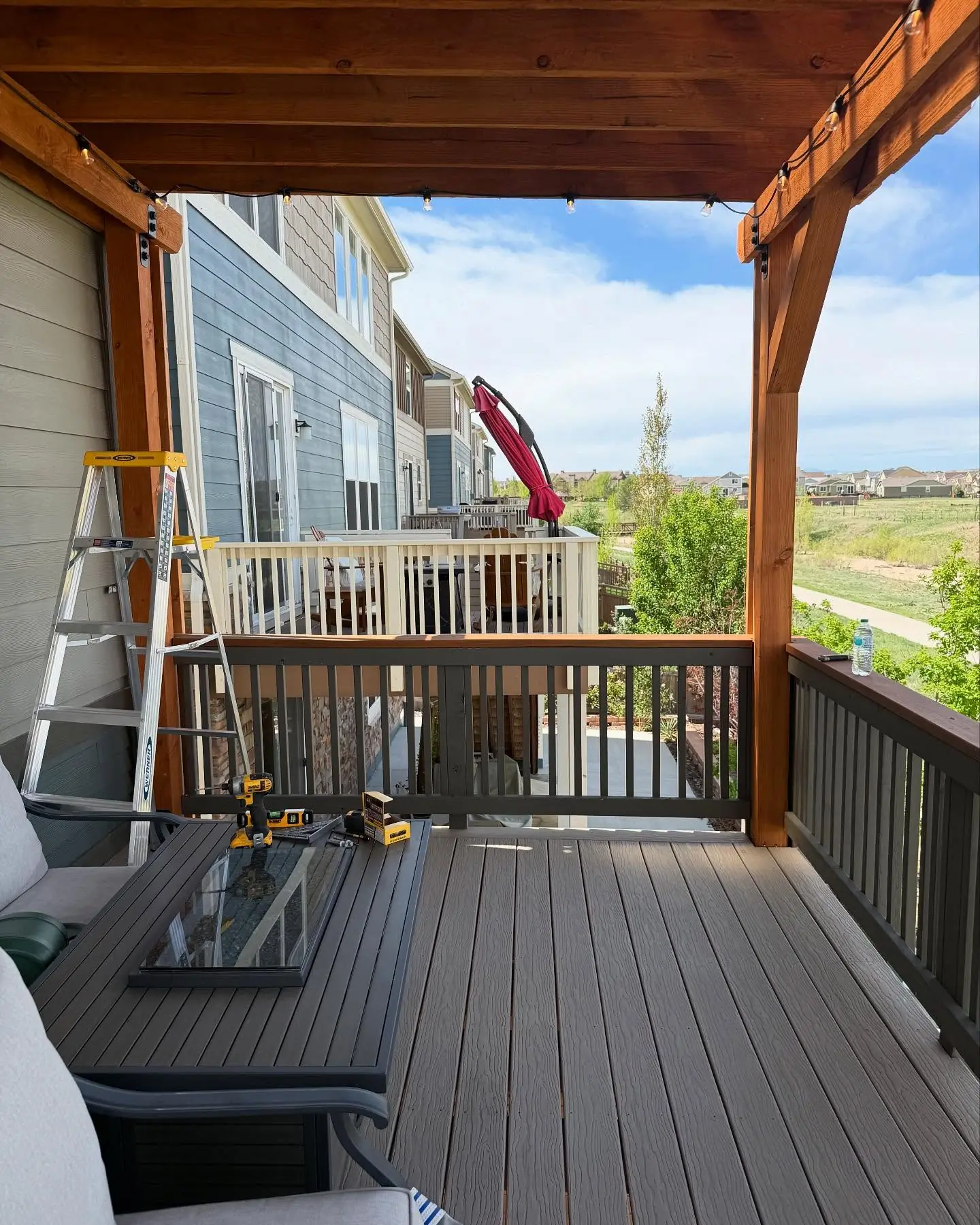
Height gets the attention, but wind is what actually governs a privacy wall on the Front Range. A solid panel is a sail, and a wall attached to a deck is only as strong as how it's anchored to that deck. We size the framing and connections for the load, tie into the deck structure properly, and where the wall meets the ground, set supports below the local frost line — often around 30 to 36 inches, confirmed for your address — so nothing heaves in a freeze-thaw winter.
One good trick for windy spots is a louvered or slatted design: angled or spaced boards block the sightline while letting some air pass through, which cuts the wind load and still gives you privacy. It's a more forgiving structure on an exposed deck than a fully solid panel.
Materials and finish
A privacy wall is seen up close and every day, so the finish matters more than on a back-corner fence. Cedar and other quality woods look great and pair naturally with a deck, but our intense high-altitude UV and dry air will gray and check bare wood quickly — so a stain or sealer, and a plan to refresh it, is part of the build, not an afterthought. Composite and metal-framed options cost more but hold their look with less upkeep.
The other half is making the wall feel built-in rather than bolted-on. Matching the board direction, spacing, and finish to the deck and house is what makes a privacy wall read as architecture instead of a barrier. If your outdoor project is bigger than just privacy, our South Denver home renovation guide covers how these pieces fit together.
HOA approval and permits
A privacy wall is an exterior change, which means the same rule as any fence or outdoor structure: check before you build. Many South Denver and Douglas County neighborhoods have an HOA with architectural (ACC) review covering height, materials, and appearance — get written approval first. Depending on the size and how it's attached, the local building division may also require a permit. Confirm both, and know your property lines if the wall sits near a boundary. Handling this up front is far cheaper than being asked to take a finished wall back down.
How to budget without overbuilding
A privacy wall is priced by the project, not by the linear foot, because it's targeted. The cost drivers are size, materials, finish, and how it attaches to an existing deck or patio. The good news is that a well-placed wall is usually a fraction of the cost of raising a whole fence line — which is exactly why starting with the sightline pays off.
| Approach | Relative cost | Best for |
|---|---|---|
| Deck screen / slatted panel | $ | Softening one view, letting air through |
| Custom privacy wall | $$ | Real privacy in one zone, finished look |
| Full fence upgrade | $$$ (~$25–$60 / linear ft) | Whole-yard exposure and containment |
Not sure which one fits your yard? Our fence and privacy installation service covers walls, screens, and full fences, and every project starts with a free on-site estimate so you don't pay for more wall than you need.
Want more privacy in your backyard?
Mountain Ridge Renovations LLC builds custom privacy walls, screens, and fence upgrades for South Denver and Parker homeowners — wind-ready, finished to match, with the HOA details handled.
Schedule a Free EstimatePrivacy wall FAQs
What is the difference between a privacy wall and a tall fence?
A privacy wall is a shorter, targeted structure — often built onto a deck or patio — that blocks a specific sightline where you sit, rather than enclosing the whole yard. A tall fence encloses the property line all the way around. A wall or screen usually solves the problem with less material and a cleaner look when you only need privacy in one spot.
How do you build a privacy wall to handle Colorado wind?
A solid privacy wall catches wind like a sail, so the framing and anchoring have to be sized for it. That means posts or supports anchored properly to the deck structure or set below the frost line in the ground, adequate bracing, and sometimes a louvered or slatted design that lets some air pass through while still blocking the view.
Does a privacy wall need HOA approval in South Denver?
Usually yes. A privacy wall or screen is an exterior change, and many South Denver and Douglas County neighborhoods have an HOA with architectural (ACC) review that covers height, materials, and appearance. Confirm your covenants and get written approval before building, and check whether the structure needs a permit.
How much does a privacy wall cost?
Because a privacy wall is targeted rather than a full fence line, cost depends on its size, materials, finish, and how it attaches to an existing deck or patio. A small deck screen is a modest project; a larger custom wall with a finished look costs more. The most accurate number comes from an on-site estimate.